'Black Tie Optional' and You're the Only Guest Who Isn't Rich
Black tie optional is a hedge in one direction. If underdressing is the more visible mistake, that decides how a small budget gets split.


Read optional as permission, not as a casual dress code
Black tie optional appears in small italics on the thick invitation that has been on your fridge for three weeks. The hosts are planning a formal evening and want the photographs to feel formal too. They also know that not every guest owns a dinner jacket or can justify buying one. The word optional gives those guests an exit from the full version; it does not make the evening casual.
The useful range is narrow. Wear a dinner jacket if you own one, or a dark suit and tie if you do not. For dresses, choose floor-length or a formal evening dress rather than something that reads as daytime. No one will enforce that rule, and etiquette guides disagree around the edges, but it is the shape of the request.
Emily Post says the invitation and wedding time are the best clues: a formal evening supports a long evening dress or dressy cocktail dress, and a tuxedo or dark suit for a man: Emily Post wedding attire. Debrett's likewise describes black tie as formal evening wear and includes evening dress, cocktail dress, and evening trousers: Debrett's dress codes.
Spend your £120 on looking settled
Guests will spread out across the softened dress code. Some will arrive in full black tie, others will choose the middle, and a few will come in below it. I cannot cite research on the social result, so treat this as judgement: underdressing is usually the more visible mistake. Nobody is likely to mock you. You may simply feel easy to spot across the room and in the photographs later.
That makes the plan with £120 straightforward: go formal, plain, and a little higher than your anxiety suggests. The hosts are signalling a proper evening while making allowances for cost. Match the formal signal.
Keep money back for alterations before buying the dress. Length makes a cheap dress look cheap when it pools on the floor or stops awkwardly above the shoe. A £40 dress hemmed to your height while you are wearing your shoes is usually better than an £80 dress that is nearly the right length. Take the shoes to the fitting. Reserving money for alterations does more than any other pound you spend.
Put the next part of the budget into fabric rather than decorative detail. High-shine cheap satin can flare under flash and crease across your lap as soon as you sit down. Matte fabric with some weight, which hangs and moves instead of standing away from the body, holds up better under evening light. Plain and dark is the safest choice in the room.
Choose one finished detail after that: shoes you can stand in for six hours, or a proper clutch instead of your everyday bag. Do not try to fund both and a third accessory. Avoid anything that needs constant adjustment; a wrong hem, slipping straps, or a neckline you keep tugging is more noticeable than the garment itself.
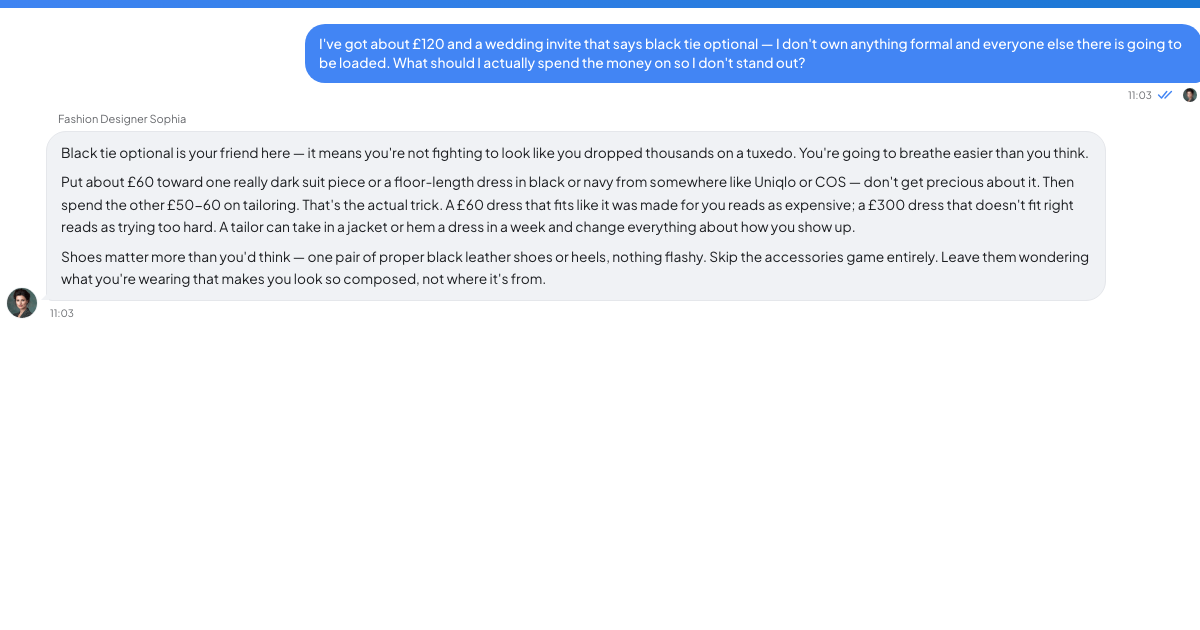
If you want a second opinion about whether one dress deserves alteration money, TrueTalk's Fashion Designer Sophia is an AI persona listed under fashion design, style consulting and trend forecasting. It cannot see the dress on you, judge its fit, or attend the wedding. The free tier includes ten conversations and one hundred messages per day.
Rental helps only when its limits suit you
Rental can put a much nicer dress within the same money. It works best when you start weeks rather than days ahead, because stock in your size on a particular date is uncertain and popular pieces go early. Rental terms also do not let you alter the item.
If off-the-peg evening wear already fits your height without adjustment, rental is probably the better value. If it does not, an owned dress that you can hem may beat a borrowed dress that you cannot.
Make the first ten minutes easier
The clothing question carries another worry: walking into a room of people whose money or shared history you do not have. An outfit cannot solve that. It can remove one thing you would otherwise manage all evening.
Arrive with the person who invited you if that is possible. Decide what you will do in the first ten minutes before you leave home. The feeling is often sharpest at the door and drops once you are actually speaking with someone. Plenty of guests are performing an ease they do not quite feel, and at many weddings nobody is assessing anyone at all.
Start with the dress that lets you stop thinking about the dress and join the reception.