You've Lost 40 Pounds on Ozempic and You Hate How Your Arms Look
Rapid weight loss can take lean tissue with fat, and arms are the last thing to come back. Most value lies between 40 and 110 grams of protein; the 110-to-145 gap matters far less.


The scale cannot tell you what the stairs can
Forty pounds have gone. Your clothes hang differently and the people watching your blood pressure are pleased. Then a changing-room mirror catches your raised arm, and the station stairs leave you stopping at the top even though you used to carry a bag up them at a normal pace. Use those stairs as an earlier progress signal than the mirror.
This concern goes beyond vanity. Any rapid weight loss takes lean tissue along with fat, whether it follows semaglutide, tirzepatide, illness or a crash diet. In the 160-person DXA substudy of SURMOUNT-1, measured at baseline and week 72, approximately 75% of weight lost was fat mass and 25% was lean mass (PubMed 39996356). The study was of tirzepatide, so it does not calculate your personal split, but it makes the concern concrete: some of the forty pounds was muscle.
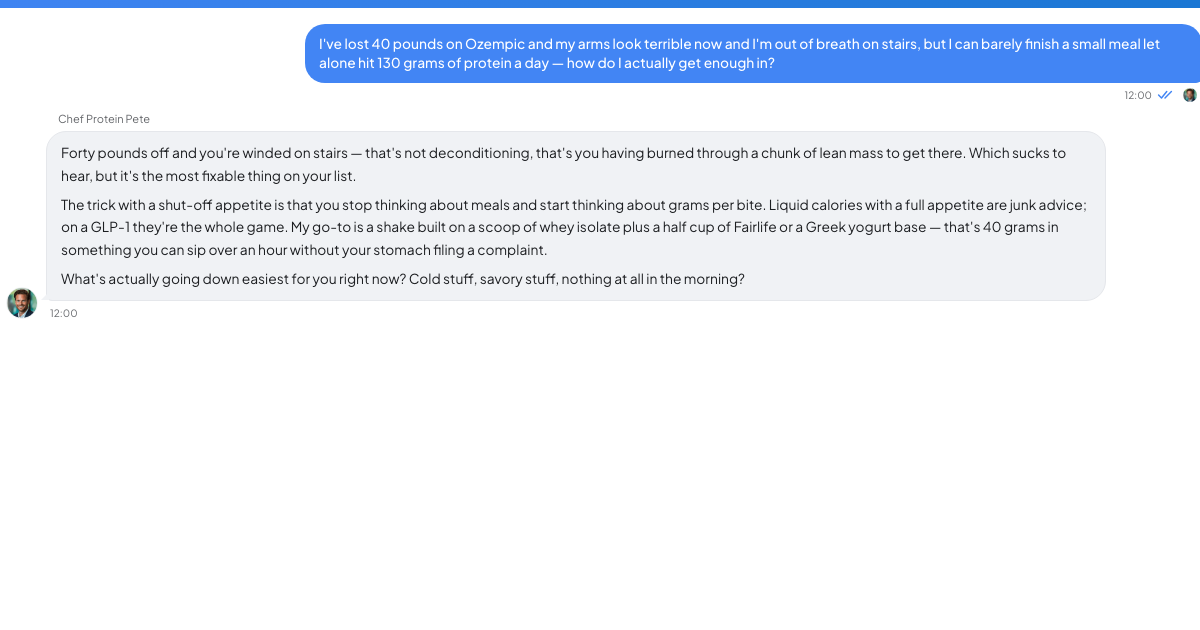
The usual instruction—lift and eat protein—assumes an appetite, four meals a day and portions you can finish. Semaglutide's delayed gastric emptying contributes to feeling full after four bites of chicken breast, and you have capacity for perhaps one small meal. An impossible target does not get followed at 60%; it gets abandoned at zero, and 130 grams can become evidence of failure when the physical volume will not fit. Weight-loss marketing compounds the problem because a pound of fat and a pound of muscle look identical on a scale.
Two levers, with the clinician holding the controls
Resistance training and adequate protein are not optional extras. Protein without a training stimulus is expensive urine because muscle keeps what it is asked to use; resistance training supplies that request. Start with two hard sessions each week covering the big muscle groups; that stimulus will do more for your arms than powder alone. Your arms can look better as muscle is rebuilt beneath the skin, and that rebuilding takes months rather than weeks.
Protein is the second lever, but the internet's 1 gram per pound convention comes from bodybuilding culture. A practical research range for preserving lean mass during a calorie deficit is roughly 1.2 to 1.6 grams per kilogram of body weight per day, with higher arguments for people who are already lean and training hard. At 90 kilograms, that is about 110 to 145 grams rather than the forum's 200.
Treat the lower figure as a floor. If you currently reach 40 grams, all the useful value lies between 40 and 110; the difference between 110 and 145 barely matters by comparison. Your age, kidney function, remaining weight loss and other medical issues can change the right target, so confirm the number with whoever prescribed the drug. Treat this as a food strategy, and leave prescribing decisions to your clinician.
Take questions about dose, titration, bloodwork, gallbladder pain, persistent vomiting, unexpected weight-loss speed, troubling side effects and whether to hold steady to that prescriber, who can also adjust the rate. An AI chat window cannot make those calls.
Spend six spoonfuls deliberately
Read labels as protein per mouthful, not merely per listed portion. Six spoonfuls of chicken soup may provide about 3 grams. The same volume of thick Greek yoghurt plus whey isolate can exceed 30 grams: strained yoghurt is around 10 grams per 100 grams and a scoop of isolate is commonly about 25 grams. At roughly 3 grams versus more than 30 grams for the same volume, that is ten times the return.
Useful small-volume foods include Greek yoghurt or skyr, cottage cheese, eggs, tinned fish, and whey or casein stirred into food. Skimmed milk powder can disappear into soup or mashed potato. Soup, salad, most bread, sauce-heavy dishes and big plates of vegetables fill the limited space and pay nothing toward protein.
Fat contains plenty of calories, yet many people taking GLP-1 medicines report that rich meals worsen nausea or sit heavily. If that matches your experience, try lean protein with a little fat instead of a rich plate you abandon halfway. Cold food is often easier than hot food when you feel queasy, according to widespread patient reports and hospital practice, but I cannot point to a study for it. Test refrigerated yoghurt or a frozen protein slushy for three days.
GLP-1 medications slow gastric emptying. For semaglutide specifically, the FDA label says it delays early post-meal gastric emptying and reaches maximum blood concentration one to three days after a dose (FDA Ozempic label). Liquid and semi-liquid protein move through the stomach faster than solid meat, so blending protein can work when chewing solid food does not. Keep the FDA's sourced one-to-three-day concentration window distinct from your own symptom record: semaglutide peaks around days two to three, many patients find suppression and side effects worst around that peak, and both often ease toward the week's end. Deliberately eat unevenly by placing larger solid portions on easier days and using cold, smooth options in the hard window; the weekly total can stay the same with less fighting.
A Sunday injection week, written out
If Sunday is injection day and Monday and Tuesday are difficult, start one of those mornings with Greek yoghurt and whey when appetite is least bad, roughly 35 grams. Sip a supermarket high-protein milk drink carrying about 20 to 30 grams over an hour. At dinner, try two eggs or a small piece of fish with cottage cheese. There may be no conventional meal, yet the total can reach roughly 70 or 80 grams.
On Friday, if appetite has loosened, use the opportunity for a normal portion of meat. Some days none of the plan will work; take what you can tolerate and do not turn one low day into a verdict. Weekly distribution can be uneven even when the weekly total is similar.
Chef Protein Pete is TrueTalk's AI persona for sports nutrition, meal preparation and macro tracking, available now. It can take the foods you can currently face and help arrange a protein floor around six spoonfuls at a time. It is not a dietitian, and anything clinical stays with your prescriber. The free tier includes ten conversations and one hundred messages per day.
Use the two weekly sessions and your agreed protein floor as the plan.