My Boyfriend Moved In and I Hate It
Hating living together does not mean the relationship is over. Work out whether it is the space, the habits, or the relationship, then change the one that is fixable.


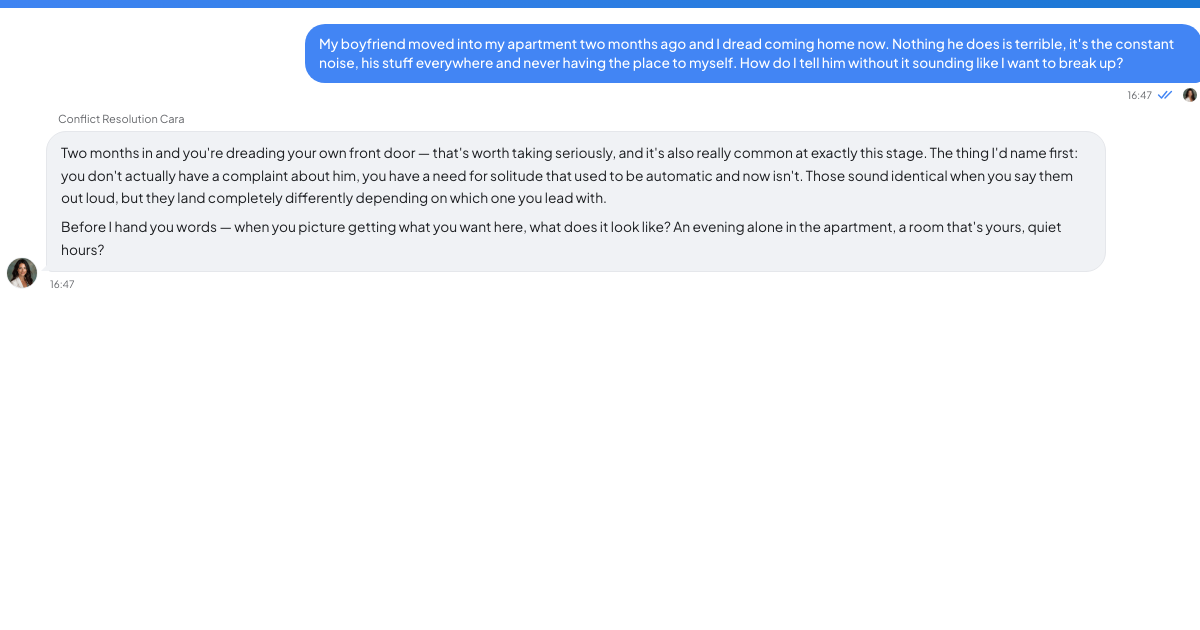
My boyfriend moved in and I hate it. Is that normal?
Yes, more than people admit. Moving in changes a relationship overnight from time you choose to time you cannot escape, and many people feel regret, irritation or grief in the first months. The useful question is not whether you should feel this way. It is whether what you hate is the space, the habits, or the relationship, because each has a different fix.
Separating those three takes about a week of honest noting, and it is worth doing before you have any big conversation.
Is it the space, the habits, or the relationship?
For one week, write down each moment you felt the urge to be alone or annoyed, in one line. Then sort them.
The space. You miss quiet, a bathroom that stays as you left it, an evening nobody asks anything of you. These are about your need for solitude, and they would probably appear with anyone. They are fixable with rules and routines.
The habits. Dishes, laundry, noise, money, how he treats your things, how much he is home. These are specific, negotiable and usually the easiest to change if he is willing.
The relationship. You like him less than you did, you dread him coming home, you feel trapped, or you are looking at him differently. If most of your notes land here, the problem is bigger than domestic logistics, and moving back out may be the honest answer.
Most people find a mix, mostly in the first two columns. That is good news, because those are the ones you can negotiate.
How did we end up here?
If you moved in quickly, because of a lease, convenience or his situation, you may not have decided much at all. Researchers at the University of Denver call this sliding versus deciding: moving through relationship stages without a clear conversation about what they mean. The same university article says sliding is not always harmful and many couples who drift into living together build strong relationships, but that cohabiting before a couple has clarified their intentions can make it harder to leave, and that commitment, communication and clarity matter more than the living arrangement alone.
You cannot go back and have the conversation you skipped, but you can have it now. It is much easier to talk about what each of you thought moving in meant than to stew about it.
What do I say to him?
Start with what you need, not with what he has done wrong.
Try:
“I've been finding the adjustment of living together harder than I expected. I'm not unhappy with you. I need some things to change so I can feel at home in my own place. Can we sit down on Sunday and work out how we run the house?”
Then bring specific, small requests with times in them:
- “I need one evening a week to myself at home. Can you plan to be out, or in the other room with headphones, on Wednesdays?”
- “Can we split chores by task, not by who notices first?”
- “I'd like a drawer and a shelf that are mine and not shared.”
- “Could we agree on guests: how much notice, how many nights?”
The Gottman Institute's guidance on conflict is useful here: it separates a complaint about one issue from criticism of the person, and says that when someone is overwhelmed they should take about 20 minutes to calm down before resuming. “You never clean up” invites a defense. “Can we split the kitchen jobs by day?” invites a decision. If either of you goes quiet or heated, break for a while and come back.
What if he doesn't change?
Give the agreement two to four weeks and revisit it on a set date. People slip back into old habits, so a first slip is normal. What you are watching for is whether he tries and whether he treats your needs as reasonable. If he keeps dismissing them (“you're too sensitive,” “this is my home too”), that is different. “This is my home too” is true and deserves a real answer: yes, and the conversation is about how two people with different needs share it.
If you got into this partly because he had nowhere to go, ask what the plan is. Moving in as a short-term fix often has no end date, and the missing end date is what many people resent most. Agree a review point, such as three months, at which you both say honestly whether this is working.
What if I want him to move out?
Then say it as a decision, not a punishment, and give a realistic timeline. Moving in together without having thought it through is a common reason for regret, and ending the arrangement does not necessarily end the relationship. Some couples go back to separate homes and are happier. Some find that the relationship was resting on the arrangement.
If you want to keep dating but not live together:
“I've learned that living together doesn't work for me right now. I'd like to keep seeing you. Can we plan for you to move out by [date]?”
If you want the relationship over as well, the practical order of steps matters, especially if the lease is in your name. See how to break up with someone you live with for the logistics, and telling him or calling a lawyer first if the arrangement is legally tangled.
Money, lease and safety: the practical side
A few facts to check whatever you decide:
- Whose name is on the lease or mortgage? If it is only yours, you control the timeline, but check local rules on removing a partner who has been living there, because in many places you cannot simply change the locks. If you are unsure, ask a local tenants' advice service or a solicitor before you act.
- What has he paid? If he contributed to rent, bills or furniture, agree what is refunded before the conversation turns emotional.
- Are you safe? If you feel afraid to tell him you want things to change, or he has threatened, intimidated or controlled you, treat that as a safety issue rather than a household one. In the US, the National Domestic Violence Hotline (1-800-799-7233, or text START to 88788) is free, confidential and open at all hours, and it can help you plan before you say anything.
When should I get help?
If you have a series of calm conversations and the same issues return, a couples counselor or a mediator can help you set rules you both keep. If your dread seems bigger than the household, an individual therapist can help you sort out whether it is about him, about living with anyone, or about something else, such as how you manage your own space and energy.
Conflict Resolution Cara, one of TrueTalk's AI advisors, specialises in relationship mediation. She can help you turn your week of notes into a short list of requests and plan the first conversation, including what to say if he gets defensive. The decision about whether he stays belongs to you.