A Collector Says They'll Take Your Paycheck Next Week. Can They?
In the US, most creditors need a court judgment before they can garnish your wages. A few government agencies are the exception. Here is how to tell a bluff from a real order.


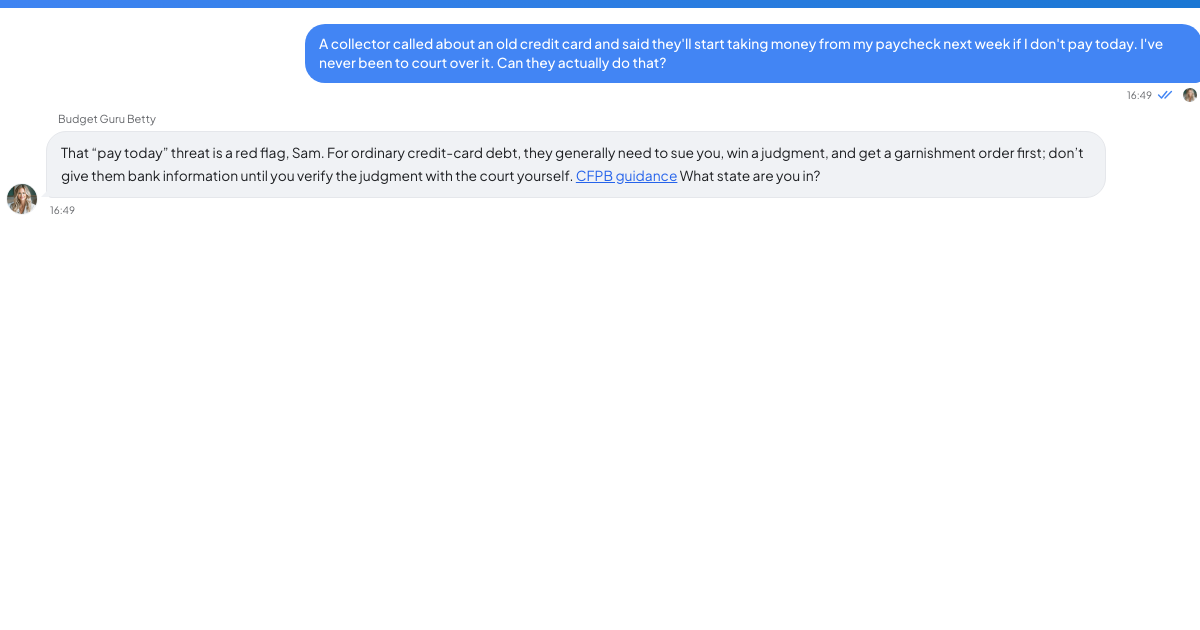
Can a debt collector garnish your wages without a court order?
In the United States, usually not. The CFPB states that most creditors need a court judgment before they can garnish wages or benefits, and that the judgment must say you owe the debt and that the creditor can garnish to collect it. A phone call, a letter, or a threat from a collector is not a judgment. The exceptions are real but narrow, and they mostly involve government agencies rather than card issuers, buy-now-pay-later lenders, or the companies that buy old debts. This post covers the US; other countries have different systems.
Who can take money without going to court?
The CFPB page on garnishing wages and benefits lists the main exceptions. Federal agencies such as the IRS or the Department of Education can take up to 15 percent of Social Security or SSDI benefits without a court order. States can generally garnish wages or bank funds to collect child support. If your debt is a credit card, a store card, a medical bill, a personal loan or a Klarna or Afterpay balance, none of those exceptions apply to it.
This matters because collectors sometimes talk as if garnishment is a next step they control. If they say we will garnish your wages on Friday and there has been no lawsuit, ask them to put the legal basis in writing. A real garnishment of a private debt follows a lawsuit and a judgment, and it reaches your employer through a formal order, not through a phone call to you.
What does a real garnishment path look like?
The order is usually: the creditor or collector sues, you are served with a summons and complaint, there is a deadline to respond, and if you do not respond or lose, the court enters a judgment. The CFPB warns that if a debt collector sues you, you should not ignore it, because you could receive a default judgment. The deadline to answer is printed on the paperwork and differs by state, so check the summons itself. The post on being sued over a card you closed walks through what to do with those papers.
So the question to ask yourself is whether you have received court papers. If you have not, the garnishment threat is premature. If you have, the clock is already running, and the most useful single step is to contact a consumer law attorney or a legal aid program the same week.
What if I really have a judgment against me?
A judgment does not mean everything you earn goes away. The CFPB notes that many states protect some wages or property, including bank funds, and points to LawHelp.org for each state's limits and how to claim them. Federal law also caps how much of your pay can be garnished for ordinary consumer debt in general, but the exact figures depend on your pay and your state, so confirm the number with a legal aid office rather than trusting a collector's math.
For federal benefits that land in your bank account, the CFPB says banks must protect two months' worth of direct-deposited federal benefits such as Social Security, SSI and veterans' benefits before freezing or garnishing an account. You can claim the same exemption for benefits deposited by check. If your account has been frozen and the balance is mostly benefits, tell the bank in writing that the funds are exempt.
A judgment can also be negotiated. Courts and creditors often accept a payment plan, and a lawyer can help you claim exemptions and propose one. The legal aid programs, your state bar's referral service and, for servicemembers, your local JAG office are the places the CFPB points to for help finding one.
What should you do while a collector is threatening you?
- Ask for validation in writing if you have not received it. A collector must provide the creditor's name, the amount owed and how to dispute within five days of first contact, and you have 30 days from receiving it to dispute in writing.
- Check whether the threat refers to a lawsuit. Ask for the case name, the court and the case number. A real case can be looked up on the court's own website or at the clerk's office.
- Keep a log of every call: date, time, who called, what they said. This also helps if the threats turn out to be false, because falsely threatening action that cannot legally be taken is the kind of thing the Fair Debt Collection Practices Act is about.
- If you want the calls to stop, send a written stop-contact letter. Under 15 U.S.C. 1692c the collector must stop further contact about that debt, with limited exceptions such as telling you it plans to use a specific remedy. Stopping the calls does not erase the debt, and a lawsuit can still follow.
- File a complaint with the CFPB if the collector misrepresents what it can do.
Does paying the collector help?
If the debt is yours and you can afford a deal, a settlement before a lawsuit is usually cheaper than a judgment with added court costs. The CFPB's settlement guide says to confirm you owe the debt, set a realistic budget, make a proposal, and get the plan and the collector's promises in writing before you make a payment. The post on whether to pay collections in full or settle goes through the decision in more detail.
If you would like to work out what you can realistically offer, Budget Guru Betty is a TrueTalk AI advisor who focuses on budget management and debt elimination, and she can help you build the monthly numbers you would take into that conversation. For anything involving a court date, a summons or a frozen bank account, a lawyer or your local legal aid office is the right person to speak to first, and none of this replaces their advice.