A Collector Offered You a Deal. Pay It in Full or Settle?
Before paying a debt in collections, in full or as a settlement, confirm the debt is yours, check how old it is, and get the deal in writing first. The order that protects you.

Should you pay a collections debt in full or settle?
It depends on three things you can check before you pay anything: whether the debt is really yours and the amount is right, how old it is, and what you can afford without missing rent or food. If the debt is valid, recent and affordable, paying in full is the simplest outcome. If you cannot pay it all, a settlement for less can be reasonable, as long as you get the terms in writing before any money moves. This post covers the US; the specifics of credit reporting and old-debt rules vary by state.
What should you do before you pay anything?
Start with validation. The FTC says a collector must give you validation information, in the first call or within five days in writing: the amount, the creditor's name, and how to dispute. The CFPB's page on negotiating a settlement lists confirming that you owe the debt as step one, and says collectors must provide information about the debt, generally in writing.
The timing matters. You have 30 days after getting the validation notice to dispute in writing, and the CFPB explains that the collector must verify the debt before it continues collecting. If the amount looks off, or you do not recognise the creditor, dispute first and negotiate second. If the debt began as a Klarna or similar plan, the post on whether Klarna can send you to collections shows what the original paperwork should say.
If the collector will not or cannot give you that information, the CFPB says it could be a scam. Verify who you are dealing with before sharing any account details.
Does the age of the debt change the answer?
Yes, and this is the check people skip. The FTC says that if a debt is time-barred, it is against the law for a collector to sue you for not paying it, though you may still owe it, and whether they can keep contacting you depends on your state. The same page warns that making a partial payment or promising to pay on a time-barred debt may restart the statute of limitations in some states. So a small good-faith payment on a very old debt can undo the protection you had.
Ask the collector for the date of your last payment and the date the account was opened, and look up your state's statute of limitations for that type of debt before you pay. A legal aid office or your state attorney general can tell you the period and whether a payment restarts it. If a lawsuit has already been filed, do not settle without legal advice; the post on being sued over a card you closed covers the first steps.
How do you decide what you can afford?
The CFPB's second step is to set a realistic budget: compare your take-home pay with your monthly expenses, leave room for emergencies, and decide the total you are willing to pay, without paying more than you can afford. If you owe the same collector on several debts, you can tell them which debt to apply a payment to.
A useful rule from there: never settle with money you need for housing, utilities, food, transport to work or medication. A collector's deadline is a sales tool. A lump-sum offer that expires today is worth less than one you can pay without borrowing from a payday lender or a credit card at a higher rate.
Paying in full makes sense when you have the money without strain, the balance is modest, or you need the account cleared for a reason such as a job or housing application. Settling makes sense when the balance is large compared with your cash, the debt is valid and you can pay a lump sum or short plan. Neither choice is automatically better for your credit; I could not verify a rule that says one is, and scoring models and lenders treat paid and settled accounts differently, so ask the collector exactly how it will report the account before you agree.
How do you make the offer?
The CFPB's third step is to explain your financial situation and make a proposal, noting that collectors may have more room to negotiate than the original creditor. Offer a figure you can actually pay, say it is a settlement of the full debt, and ask for the terms in writing.
Before you pay, the CFPB says to get the plan and the collector's promises in writing. The FTC adds that before paying to settle, you should get a signed letter confirming the payment settles the entire debt. That letter should state the amount, that it resolves the account in full, and what will be reported to credit bureaus. Pay with a method that leaves a record, not with direct access to your bank account, and keep the letter permanently.
What warning signs mean walk away?
A collector who will not put anything in writing. A demand to pay today by gift card, a payment app, or cryptocurrency. Threats of arrest or of garnishment with no lawsuit, which the post on wage garnishment without a court order explains. A debt settlement company that charges money in advance; the CFPB cautions that some promise more than they deliver. Nonprofit credit counseling agencies are a safer starting point, such as those affiliated with the National Foundation for Credit Counseling.
If the calls themselves are the problem, a written stop letter ends the contact but not the debt, and the guide on calls to your work or family explains what is allowed.
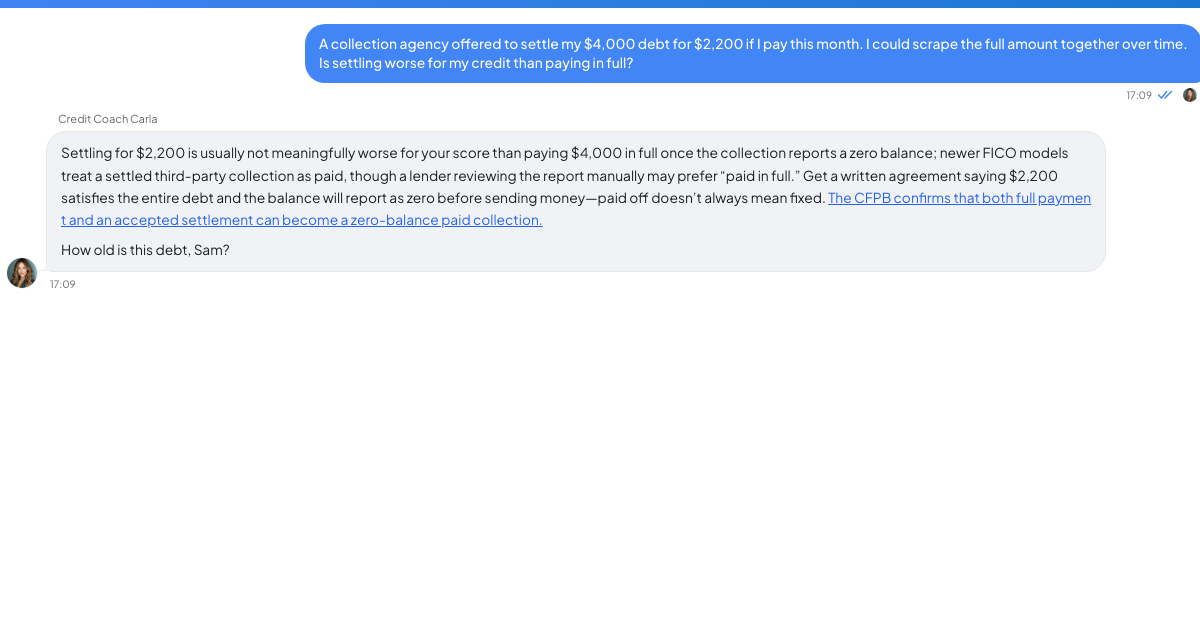
If you want help working out a realistic offer, Credit Coach Carla is a TrueTalk AI advisor who focuses on credit improvement and debt management, and she can help you set a budget and draft the settlement letter. For a lawsuit, an old debt you are unsure about, or large balances, a consumer attorney or legal aid office should check the details first.