A Debt Collector Keeps Calling You About Someone Who Isn't You
If a debt collector keeps calling about a debt that is not yours, do not just ignore it. Dispute it in writing, tell them to stop, and keep records. The US steps, in order.


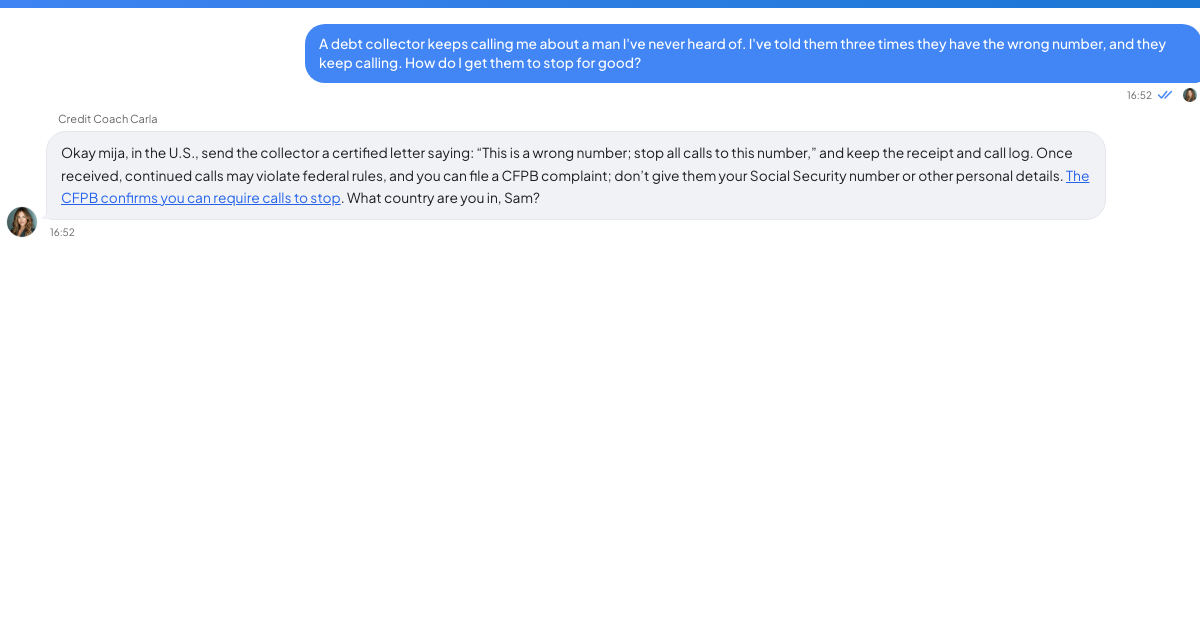
What do you do when a debt collector keeps calling for someone else?
In the US, put it in writing. Send the collector a letter saying the debt is not yours and asking them to stop contacting you, keep a copy, and log every call. The CFPB advises against relying on calls alone, because ignoring a collector rarely makes the calls stop, and a written response creates a record that protects you. The rules below are for the United States and its federal debt collection law, the Fair Debt Collection Practices Act (FDCPA).
Why would a collector be calling you about someone else?
Mostly through recycled phone numbers and bad data. Someone had your number before you did, or a name or address got matched wrongly, or a relative gave your number as a contact. Less often it is a sign of identity theft, which needs a different response. The CFPB's page on debts that are not yours is clear that it does not cover identity theft, so if you see accounts you never opened on your credit report, treat it as a separate problem and visit the FTC's identity theft site.
If you are only getting calls for a person you do not know, you are what the law calls a third party. The FTC says a collector can contact other people to find a debtor's address, phone number or workplace, usually only once, and it can never tell them the person owes a debt. A collector that keeps ringing you and reveals the debt is stepping outside those rules.
Should you answer the phone?
You can, once, to say two things: you are not the person they want, and they should remove your number. Do not confirm your name, address, employer or any part of your Social Security number, and do not agree to anything. If the call is an automated voicemail and you do not answer, nothing is gained from picking up every time.
The calls also have limits. Under the CFPB's Debt Collection Rule, a collector is presumed to be breaking the law if it calls about a particular debt more than seven times within seven days, or within seven days after a phone conversation about that debt. The CFPB explains that voicemails count as calls, and that this presumption covers phone calls only, not texts or emails. If a collector is calling you daily about someone else, write down the numbers and the dates.
How do you stop the calls in writing?
Send a short letter by certified mail with a return receipt, or use the collector's electronic option if it offers one. Say your name, the date, the number they have been calling, and that you are not the person they are looking for and are requesting that they stop contacting you. Keep a copy.
Under 15 U.S.C. 1692c, once a consumer notifies the collector in writing that they want contact to stop, the collector must stop further contact about that debt, with narrow exceptions such as confirming no further contact will occur. The CFPB's stop-contact page adds that if a collector keeps contacting you after a written request, it is likely violating the FDCPA and you can sue for that violation. Suing is a decision to make with a consumer attorney.
A stop letter ends the contact and does not decide who owes what. If there is any chance the debt is yours, such as an old account in your name, the stop letter does not erase the debt, and the collector may still sue or report it. In this case you want a dispute letter instead of, or alongside, a stop letter.
How do you dispute a debt that is not yours?
After the first contact, the collector has to provide validation information, either in the call or within five days in writing: the creditor's name, the amount, and how to dispute it. The FTC says you then have 30 days from receiving that information to send a dispute letter, and once the collector receives your dispute it must stop trying to collect until it sends written verification. If you miss the 30 days, the collector will treat the debt as legitimate, which is why it is worth sending the letter quickly.
In your dispute, state that you do not owe the debt, and ask for proof that you are the right person and how they calculated the amount. The CFPB offers sample letters for exactly this, and its page on disputing debts says to keep copies of everything and consider certified mail. If the collector cannot or will not provide the validation information at all, the CFPB warns it could be a scam, so do not share financial details until you have confirmed who is calling.
What if the debt is real but your relative's?
If the caller is looking for a family member, you do not owe their debt unless you cosigned or hold a joint account. You are not required to give out their contact details. If you want to help, you can tell them the collector's name and let them handle it, and our post on the card in both your names after a move-out covers the situation where your name is on the account too.
When should you file a complaint or get help?
If calls continue after your written letter, file a complaint with the CFPB and consider talking to a consumer law attorney or your state attorney general's office. For a quick check of your own credit file, you can get your reports free from the official site AnnualCreditReport.com to see whether the account appears under your name.
If you want a second pair of eyes on a letter or on what your credit file shows, Credit Coach Carla is a TrueTalk AI advisor focused on credit building and debt management, and she can help you draft a clear dispute. For any situation involving a lawsuit, court papers or suspected identity theft, speak to a lawyer or legal aid office as well. If the debt turns out to be yours after all, the post on whether to pay collections in full or settle is the next read.