A Debt Collector Called Your Boss and Your Sister. Is That Legal?
In the US, a debt collector can contact other people only to find you, and can never tell them you owe. You can also block calls at work. What the law says and what to send.


Can debt collectors call your work or your family?
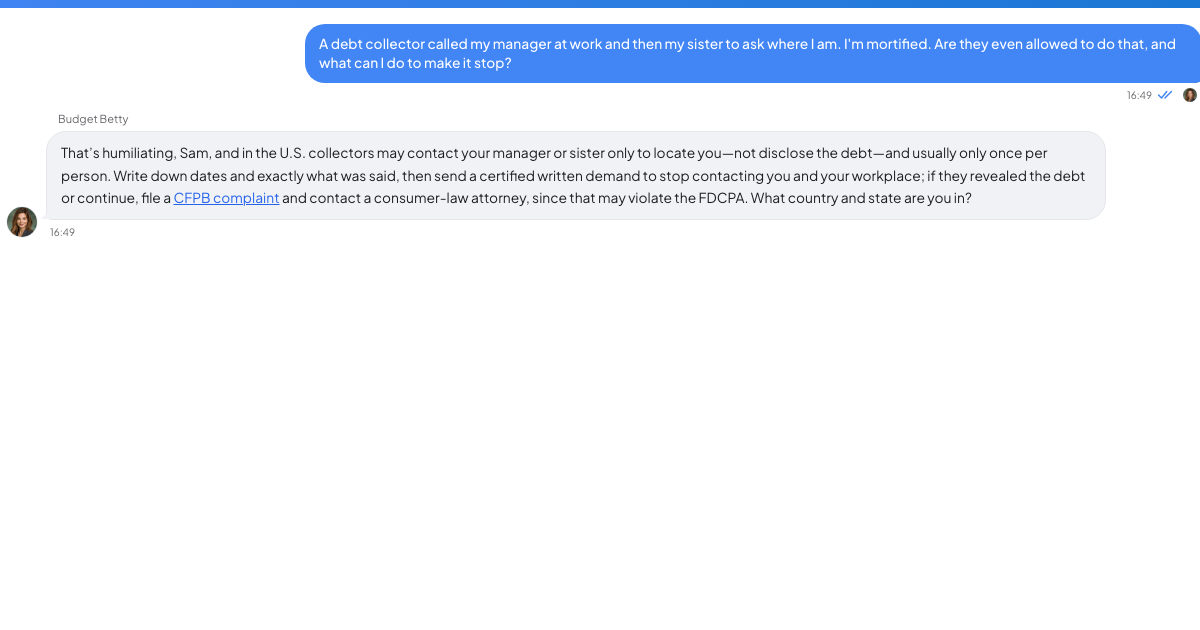
In the United States, they can contact other people only in limited ways, and they cannot tell anyone you owe a debt. The FTC's debt collection FAQ says a collector may contact others to find your address, phone number or workplace, usually not more than once, and it can never tell them you owe a debt. On your job specifically, the FTC says collectors cannot contact you at work if you tell them you are not allowed to get calls there. These rules are from the federal Fair Debt Collection Practices Act (FDCPA) and apply in the US.
What can a collector say to your relatives?
The statute is 15 U.S.C. 1692c. Without your consent or a court's permission, a collector generally may not discuss the debt with anyone except you, your attorney, a consumer reporting agency where permitted, the creditor, or the creditor's or collector's attorney. For purposes of that section, the term consumer also covers your spouse, so a collector can talk to your spouse about the debt.
So if a collector rings your sister, the lawful call sounds like: this is a company trying to reach you, do you have a number or address? The unlawful call is when they say what the debt is, how much it is, or that you are behind. If your relative tells you they said more than that, ask them for the date, the company name and the number, and write it down while it is fresh. A pattern of those calls is a legitimate basis for a complaint.
What about calling your boss?
The statute says collectors may not contact you at work if they know or have reason to know your employer prohibits it. In practice, the cleanest route is to tell them. The FTC puts it simply: collectors cannot contact you at work if you tell them you are not allowed to get calls there. Do it in writing if you can, and say plainly that your employer does not allow these calls.
A collector who has gone to your workplace and told a supervisor or coworker about your debt has probably crossed the line under the rule on third parties. Keep any message left, and ask your HR contact to note the date and who called.
What hours can they call?
Collectors must assume the convenient time to reach you is between 8 a.m. and 9 p.m. local time where you live, unless they have other information. The FTC states they cannot contact you before 8 a.m. or after 9 p.m. unless you agree. The CFPB's Debt Collection Rule adds a frequency limit: a collector is presumed to be breaking the law if it calls about one debt more than seven times within seven days, or within seven days after having a conversation with you about it. The CFPB page on call frequency explains that voicemails count as calls, and that the presumption covers phone calls rather than texts or emails.
You can also tell a collector what hours and places are inconvenient. The CFPB says you can ask them to call at a more convenient time. The statute bars contact at a time or place the collector knows or should know is inconvenient to you, and I found no federal rule that bans Sunday calls outright, so if Sundays are a problem, tell them in writing.
How do you stop them from calling anyone?
Send a written stop-contact letter to the collection company. The statute says that if you notify the collector in writing that you refuse to pay or want contact to stop, it must stop further contact about that debt, with limited exceptions such as telling you its efforts are ending or that it intends to use a specific remedy. Mail takes effect when received, so use certified mail with a return receipt and keep a copy. The CFPB's stop-contact page has sample letters.
Be aware of what the letter does not do. Stopping contact does not make the debt go away, and the CFPB says collectors may still sue or report negative information to a credit reporting company. If the debt is not yours or you want proof of it, send a dispute within 30 days of the validation notice as well, because a timely written dispute pauses collection until the collector verifies it. The post on being called about someone else's debt has the full dispute sequence.
What if they keep going after the letter?
The CFPB says that if a collector keeps contacting you after a written stop request, it is likely violating the FDCPA and you can sue for that violation. Before that, collect evidence: call logs, voicemails, screenshots of texts, the dates relatives were called. File a complaint with the CFPB, and consider your state attorney general's office. A consumer protection attorney or a legal aid office can tell you whether the violations are worth a claim, and I am not able to judge that for your case.
What should you do about the debt itself?
Stopping the calls buys space, not a solution. If the debt is real, decide whether to pay, negotiate or let a time limit run, and be careful with that last option because the FTC notes that in some states a partial payment or a promise to pay on an old debt can restart the clock. Our post on whether to pay collections in full or settle walks through that choice, and the wage rules in can a debt collector garnish wages without a court order explain what a lawsuit would change.
If you would like to sit down with your monthly numbers, Budget Betty is a TrueTalk AI advisor who helps people compare budgeting options and money management plans, and she can help you see what you could afford to offer. If the calls have already caused trouble at work, or you have received court papers, speak to a lawyer or legal aid office for advice that fits your state.