Your Mother Died and the Credit Card Company Is Calling You
In the US, a parent's credit card debt is generally paid from their estate, not from your own money. What to say to the collector, who is the exception, and what not to sign.


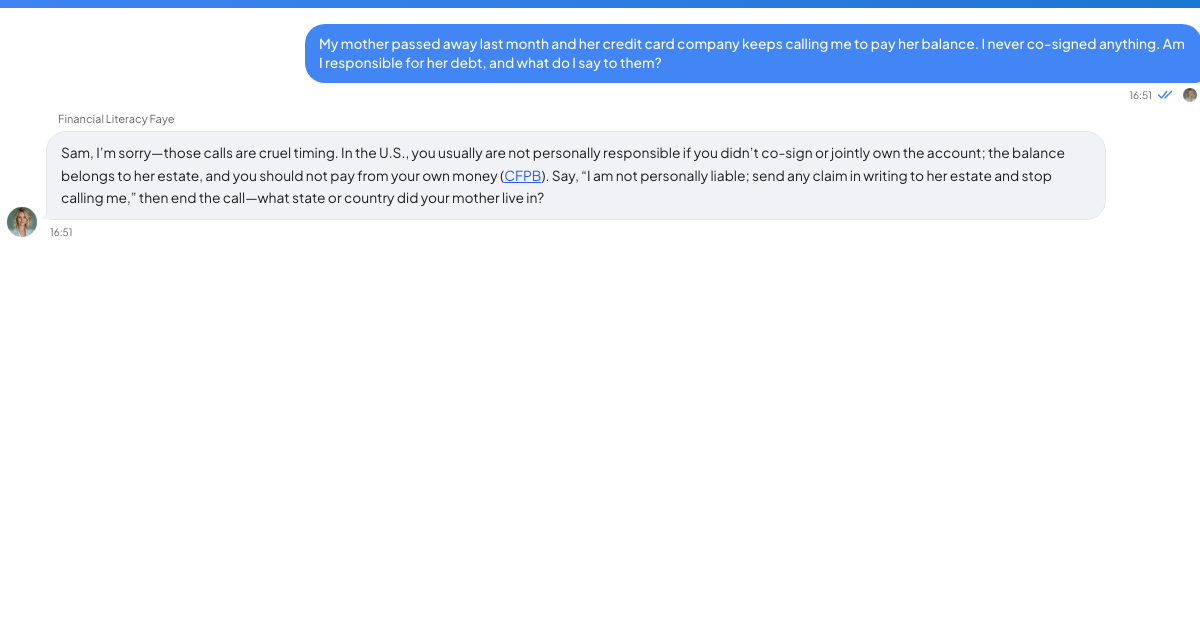
Do you have to pay your deceased parent's credit card debt?
In the US, usually not from your own money. The FTC says that as a rule a person's debts do not go away when they die, but they are generally paid from the estate, and family members usually do not have to use their own money. If the estate does not have enough, the FTC says the debt usually goes unpaid. The exceptions are specific, and collectors do not always explain them, so it helps to know them before you answer the phone. This post covers US rules and general information; state probate law varies, so an estate lawyer or legal aid office can confirm your situation.
Who does pay it?
The estate does. That means the deceased person's money and property, which the executor named in a will handles, or an administrator a court appoints if there is no will. The FTC's guide on debts and deceased relatives says the executor is responsible for settling the deceased person's debts. Creditors generally come forward and are paid from what the estate holds, according to state rules, which can include an order of who is paid first.
A practical consequence: if your parent left a house, savings or a car, a card balance may reduce what the heirs receive. If your parent left almost nothing, the balance may go unpaid, and the issuer absorbs it.
When would you be personally responsible?
The FTC lists the cases. You may be personally responsible if you cosigned the obligation or held the account jointly with your parent. A surviving spouse can be liable in some cases, such as living in a community property state, which the FTC illustrates with California. If you were only an authorized user on the card, the FTC page does not address that situation, so ask the issuer in writing what your status is and keep the reply.
If you used the card yourself for your parent's expenses, such as groceries or medical costs, talk to a lawyer before assuming you are in the clear, because your own charges and your parent's charges are different questions.
What can a collector say to you?
This is where families get pressured. Under the Fair Debt Collection Practices Act, the FTC says, collectors can discuss the debt only with certain people, such as a spouse, the executor or a lawyer, and debt collectors may not discuss the debts of a deceased person with anyone else. They may contact relatives once to get the representative's contact information, but cannot discuss the debt itself. The statute also treats a spouse, a parent of a minor, a guardian, an executor or an administrator as the consumer for communication purposes.
In other words, if a collector tells you that you must pay your mother's card, or that the family is responsible, they are claiming something that the FTC says is generally not so. Do not argue on the phone. Say the sentence below and end the call.
What should you say to the collector?
Something plain: my mother has died. I am not the executor and I am not a cosigner, so I will not be discussing her account. Send any written notice about the debt to the executor of the estate, and here is the name and address, if you have an executor. If you are the executor, ask for the details in writing and do not agree to a payment from your personal funds.
Then follow up in writing. The CFPB's stop-contact page describes how to ask a collector to stop contacting you by letter, and the collector must stop once it receives that notice, with limited exceptions. Keep a copy and send it by certified mail. Because the debt may still be a valid claim on the estate, this letter should go together with the executor's own response rather than replace it.
What should you avoid?
Do not sign or pay anything just to make the calls end. Paying a small amount, or agreeing to a payment plan in your own name, can turn an estate debt into a personal commitment. Do not give out your parent's Social Security number or account details to someone who called you first; ask for the collector's name, company and a written validation notice, and verify before you share anything, because unsolicited calls to grieving families are a known route for scams. The FTC says to dispute in writing if the debt is not yours, and the collector must stop collecting until it sends written verification.
If you are the executor, be careful with the order in which you pay. Paying a card before you know what else the estate owes can leave you in a bad position if the estate turns out not to have enough, so get advice from an estate attorney before distributing anything to heirs.
What if the debt was bigger than you expected?
Grief and money tangle badly here. If you are looking at a balance that is bigger than your parent ever mentioned, ask for an itemised statement and check for charges that look wrong. The same disputes and written-notice habits apply, and the post about a card in both your names after a breakup explains how joint liability on a card works while someone is alive, which is the situation a joint holder is in after a death.
If you want to work through the numbers calmly, Financial Literacy Faye is a TrueTalk AI advisor who focuses on personal finance education, and she can help you list what the estate holds, what it owes, and what questions to take to a lawyer. If a lawsuit notice arrives in your name, do not wait; the post on being sued over a card you closed covers the first steps, and a legal aid office can take it from there. For the collector calls themselves, the guide on whether debt collectors can call your family goes through what is and is not allowed.